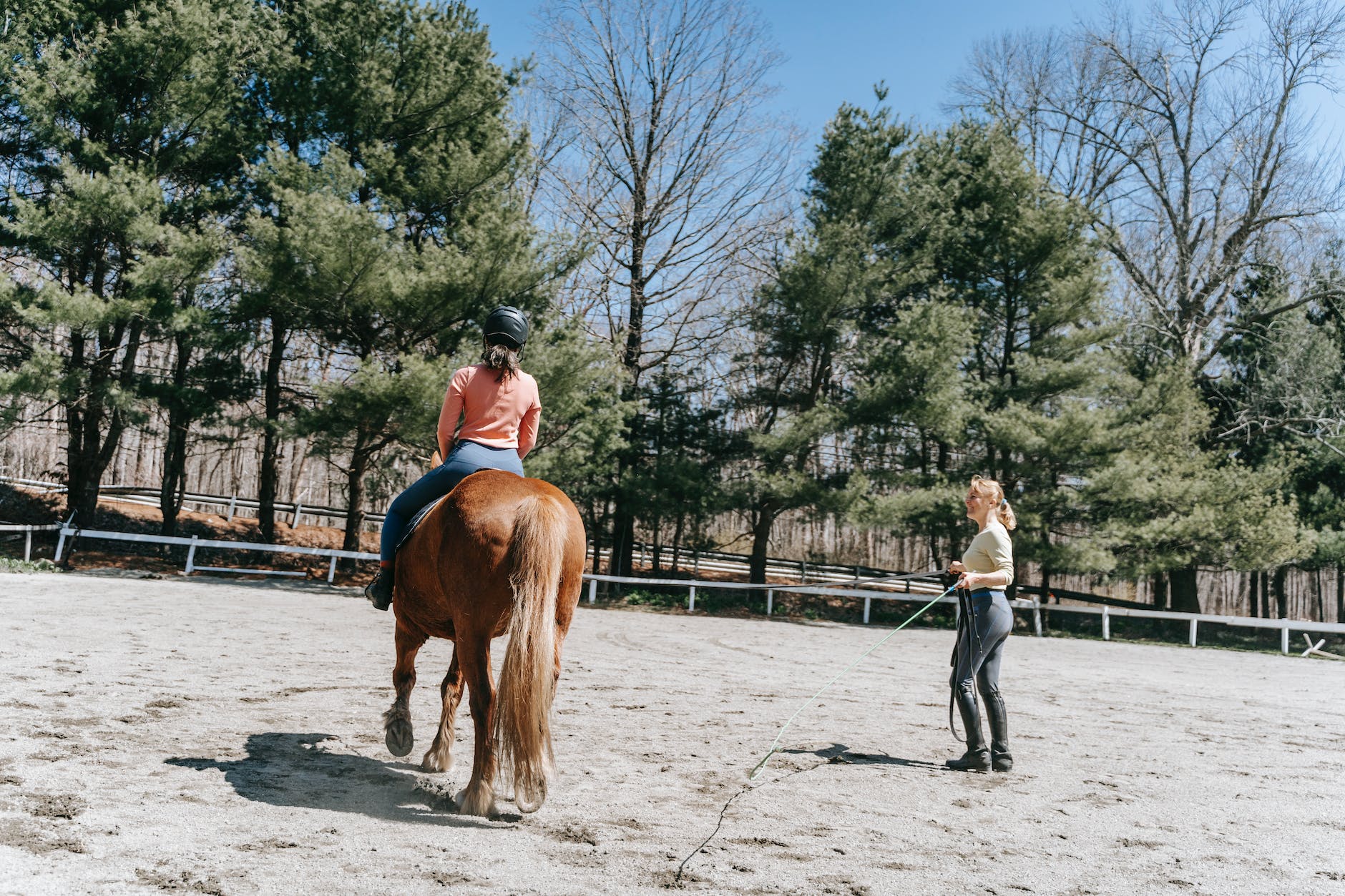
As a lesson student, you usually go to the barn once or maybe twice a week. You arrive, your trainer tells you who you’re riding, you go get the horse, you ride, put it away, and then come home.
What you don’t know is that your favorite lesson horse was probably already ridden a few times before you, or he has a couple lessons to work after you’re done.
While every equestrian, no matter what level they become, must learn to ride on our sweet and patient lesson horses, it can be a hard life for them. Here are some things that our lesson horses might have to endure, obviously depending on the barn:
1. Rarely any turnout time.
Most lesson horses (and high performance horses) are kept in stalls most of the time. Many owners fear that if they’re turned out, they might get injured, and then they can’t do lessons — a.k.a. the barn can’t make any money until the horse heals.
Turnout time is essential to a horse’s mental health. The horse gets put out after working and then an hour later someone else is super excited to come ride him! But then….the horse runs away and turns its back to them when they walk up with the halter. The horse is saying, no thanks, I’d rather stay out in the field.
2. When they do get turned out, there is no space or forage or friends.
How many barns have you been to that are operating on less than 15 acres? If you live in an urban or suburban area, it’s probably the vast majority of them. If you’re out in the countryside, you’re less likely to see this. Remember the classic rule, “One acre per horse?” Well, it’s not uncommon to see that rule broken, and, realistically speaking, a single horse needs more than one acre to properly graze. So, even when your favorite lesson horse gets turned out, odds are, they don’t have enough space to roam or grass to eat.
Horses are meant to be on a forage-based diet, and when they’re primarily fed one or two large meals a day, they can develop ulcers and other lists of problems. Horses need to be munching and snacking all day…is this the case for your lesson horse?
Aside from the lack or forage and space, horses need friends. They’re highly social animals that instinctively operate in a herd setting — they need their horse family! When your horse is kept in a paddock with one other horse (especially if they’re by themselves!) it goes against their natural way of life. Remember, our horses’ mental health is more important than our convenience.
3. Lack of vet visits and physical therapy.
How many times have you had to kick the chronically lazy horse at your barn? How many times have you had to dodge nips and kicks from the girthy horse at your barn? How many times have you joked with your trainer about the “sassy attitude” the lesson mare has for pinning her ears all of the time? These behaviors are not normal. These behaviors are not okay. The girthy horse is in pain. The ear pinner is in pain. The lazy horse is in pain. They are just communicating with us that something is not okay — and we, of course, have chosen to make it the norm instead of listening to our horses.
Our lesson horses need vet visits and physical therapy if they’re displaying any abnormal behavior.
4. Beginners bouncing on their backs.
Speaking of pain, lesson horses go through a lot of little kids and a lot of little kids learning. The learning process can be messy for most riders. They can be rough and heavy in the horse’s mouth, they can bounce on their backs, they can grip the horse to death, they can kick too hard — the lesson horse has a hard job and must have patience.
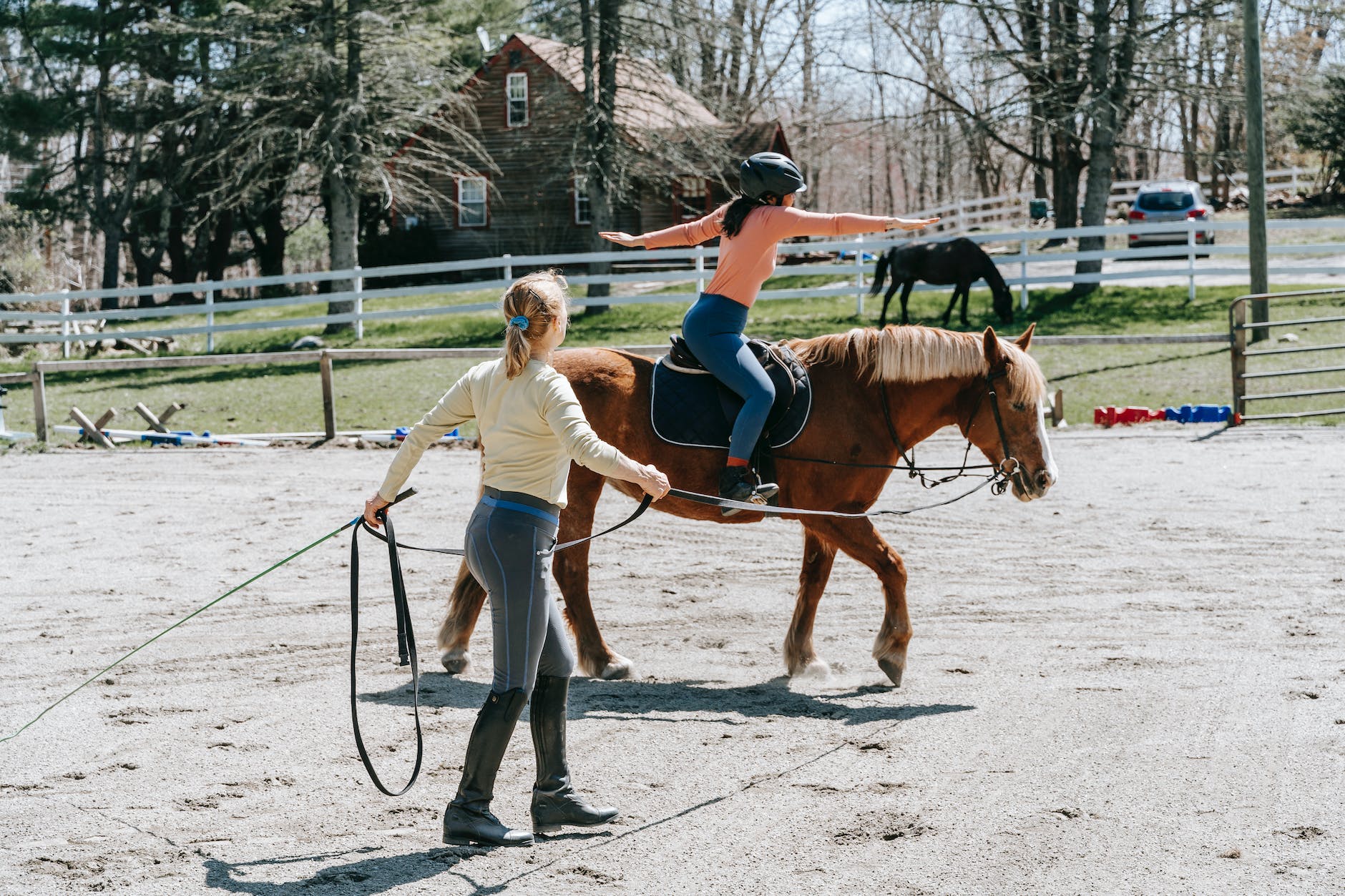
Let me clarify that there is nothing wrong with beginners learning. I am a trainer and teach beginners every day. However, I take some action to help my horses. I put on hackamores or side-pulls to prevent the new rider from pulling in their mouths. I put on Western saddles for beginners so they can hold onto the horn when learning and don’t bounce around as much. I walk and lead the horse the entire lesson and teach right next to my rider so they have direct instruction and aren’t guessing on what to do with the horse. If your horse isn’t safe enough to go bitless or do some of these other things for a beginner….it’s probably not a beginner safe horse.
5. Ill-fitting tack.
Many lesson horses that I’ve worked with have had ill-fitting tack and people had no idea. Of course I’m not a certified saddle fitter, but I’ve done enough research to know when a saddle does not fit. People underestimate the severe damage a poorly fitted saddle can do to a horse over time. If you’re a trainer in a lesson program or a rider, ask someone who knows about saddle fit or call a saddle fitter to check on some of your problem horses to rule out this issue!
6. Overuse.
It’s not uncommon for lesson horses to be overused. I’ve seen it multiple times across different programs. It all boils down to money and pleasing clients. It’s hard to cancel a client because the horse you’re going to use has been used their max lessons for the day or has suddenly become lame. But the horse’s health is more important than your clients feelings. As long as your client gets their ride in sometime and get their money’s worth, then all should be good. If your client doesn’t understand that the horse’s health comes first, then perhaps they shouldn’t be horseback riding.
With that being said, if you’re running into the issue frequently as a trainer — you need another lesson horses. Or maybe two. Or three. If you have a large client base and cannot support it ethically with the horses you have, either cut down on clients or buy new horses!
With all of that being said, please understand the hard job your lesson horse has! Give them extra love and do everything you can as a rider or trainer to support them — they rely on us and we rely on them!
 Redish Equine Journal
Leave a comment